
Heyser Memorial Lecture
AES 125th Convention
Moscone Center - San Francisco, CA, USA
Friday, October 3, 2008, 7:00 pm — 8:30 pm
Sound Reproduction: Where We Are and Where We Need to Go
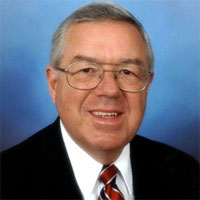
by Floyd Toole
 Abstract
The Richard C. Heyser distinguished lecturer for the 125thAES Convention is Floyd Toole. Toole studied electrical engineering at the University of New Brunswick and at the Imperial College of Science and Technology, University of London, where he received a Ph.D. In 1965 he joined the National Research Council of Canada, where he reached the position of Senior Research Officer in the Acoustics and Signal Processing Group. In 1991, he joined Harman International Industries, Inc. as Corporate Vice President – Acoustical Engineering. In this position he worked with all Harman International companies, and directed the Harman Research and Development Group, a central resource for technology development and subjective measurements, retiring in 2007.
Toole’s research has focused on the acoustics and psychoacoustics of sound reproduction in small rooms, directed to improving engineering measurements, objectives for loudspeaker design and evaluation, and techniques for reducing variability at the loudspeaker/room/listener interface. For papers on these subjects he has received two AES Publications Awards and the AES Silver Medal. He is a Fellow and Past President of the AES and a Fellow of the Acoustical Society of America. In September, 2008, he was awarded the CEDIA Lifetime Achievement Award. He has just completed a book Sound Reproduction: Loudspeakers and Rooms (Focal Press, 2008). The title of his lecture is, “Sound Reproduction: Where We Are and Where We Need to Go.”
Over the past twenty years scientific research has made considerable progress in identifying the significant variables in sound reproduction and in clarifying the psychoacoustic relationships between measurements and perceptions. However, this knowledge is not widespread, and the audio industry remains burdened by unsubstantiated practices and folklore. Oft repeated beliefs can have status and influence commensurate with scientific facts.
One problem has been that much of the essential data was obscured by disorder: the knowledge was buried in papers in numerous books and journals, indexed under many different topics, and sometimes a key point was peripheral to the main subject of the paper. Assembling and organizing the information was the purpose of my recent book, Sound Reproduction (Focal Press, 2008). It turns out that we know a great deal about the acoustics and psychoacoustics of loudspeakers in small rooms, and this knowledge provides substantial guidance about designing and integrating systems to provide high quality sound reproduction.
However, what we hear over these installations is of variable sound quality and, more importantly, not always what was intended by the artists. Inconsistent and imperfect devices and practices in both the professional and consumer domains result in mismatches between recording and playback. Standards exist but are not often used. Many of them are fundamentally flawed. If we in the audio industry are serious about our mission to deliver the aural art in music and movies, as it was created, to consumers, there is work to be done. It begins with agreeing on the objectives, and is followed by an application of the science we know.
The presentation will be followed by a reception hosted by the AES Technical Council.