
Heyser Memorial Lecture
AES 124th Convention
RAI - Amsterdam, Netherlands
Sunday, May 18, 2008 - 18:15-19:15
The Big Challenges in Audio, a glance into the future
by Guus Berkhout
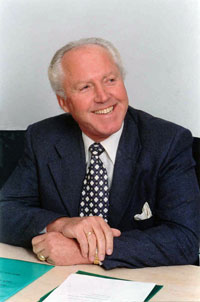
Biography
Professor Guus Berkhout started his career with Shell in 1964, where he held several international positions in R&D and technology transfer. In 1976 he accepted a Chair at Delft University of Technology in the field of acoustical and geophysical imaging. During 1998 – 2001, he has been a member of the University Board, being responsible for scientific research and intellectual property. In 2001 he also accepted a Chair in the field of innovation management.
Guus Berkhout has written several hundred scientific papers and a number of books in the fields of acoustics, geophysics and innovation. In the late eighties he introduced the concept of wave field synthesis (WFS) and wave field analysis (WFA) in audio engineering. In 2003 he received the highest international award in the field of Exploration Geophysics.
Since the early nineties, Guus Berkhout has concentrated on matters related to innovation. In 1997, he was invited by the OECD to advice on science and technology issues. He has been a member of the ‘High Level Working Group’ to assist the European Commission with the establishment of an integrated innovation policy in the EU. Recently, he also served as chairman of the committee of experts that advised the Dutch government on the environmental problems around the Netherlands’ international airport, Schiphol.
Professor Guus Berkhout is a member of the Royal Netherlands Academy of Arts and Sciences (KNAW) and the Netherlands Academy of Engineering (AcTI). He received honorary memberships of the Society of Exploration Geophysicists (SEG) and the European Association of Geophysicists and Engineers (EAGE). He also serves on a number of Governing Boards in the scientific and business communities.
For further information, see www.aj-berkhout.nl.
The Big Challenges in Audio, a glance into the future
Sound is an important information carrier. In speech and music the source carries the message, but in acoustical imaging the message is given by the medium. In all these applications, it is important to realize that sound is a wave phenomenon, often with complex wave fronts and complex time signals. For example, in enclosed spaces wavefields represent an intricate interference pattern of multi-source signals and multi-boundary reflections. Here, audio systems have the important task to enhance the social function of these spaces. If we want to make the next big step in improving audio solutions for demanding listening environments, we should challenge traditional believes and rethink current design methods.
On the one hand, there is the dimension of new technological capability. Wavefield knowledge should have a major impact on the way we develop the next generation of audio products. This technological expedition into the future will lead us to the exciting world of transducer arrays and matrix processors, both for analysis (WFA) and synthesis (WFS) purposes. New functionality will include variable acoustics, focused sound delivery and selective signal enhancement.
On the other hand, there is the dimension of improved user value. For commercial success, technological excellence is necessary but the perceived value by the market is of overriding importance. Knowledge of the changing soft values in society should inspire the new solutions. This human-centred expedition into the future will bring us to the innovative world of integrated audio-optical systems. Examples are the combination of variable acoustics with variable lighting (WFS-plus), the integration of hearing aids with spectacles (‘hearing glasses’) and the connection of optical cameras with highly directional microphones (‘forensic audio products’).
In conclusion, the message of the 2008 Richard C. Heyser Memorial Lecture is: “do not try to predict the future, but have the ambition to create the future”.
The presentation will be followed by a reception hosted by the AES Technical Council.