
Heyser Memorial Lecture
AES 119th Convention
Javits Convention Center - New York, NY, USA
Saturday, October 8, 2005 - 6:45-8:30pm
Sound Transmission and Analysis in the Ear - Recent Insights
by Jozef J. Zwislocki
Biography
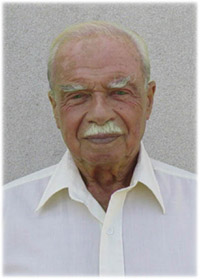 The Richard C. Heyser distinguished lecturer for the 119th AES Convention is Jozef J. Zwislocki. He obtained his engineering degree in 1945 from the Swiss Federal Technical Institute that, three years later, awarded him the degree of a Doctor of Technical Sciences. His doctoral dissertation, published as a Supplement of Swedish Acta Laryngologica, earned him an invitation to the First Speech- Communication Conference at MIT. On the basis of his lecture he was offered the position of a Research Fellow at the Psychoacoustic Laboratory of Harvard University. Six years later, he accepted the position of a dual Associate Professor in Special Education and Electrical Engineering at Syracuse University. In 1962, he was promoted to full Professorship. Already in the second year in Syracuse, he organized the Bioacoustics Laboratory which soon expanded to other senses, beyond hearing, and, in 1963, received the name of the Laboratory of Sensory Communication. Ten years later, the Laboratory advanced to the Institute for Sensory Research at a departmental level. Zwislocki directed it until 1984 when he received the title of a Professor in Sensory Research and, few years later, of a Distinguished Professor of Neuroscience. He retired in 1992 and is currently a Distinguished Professor Emeritus. During his long career, Zwislocki received numerous distinctions, among them, the international Amplifon Prize, Javits Neuroscience Investigator Award, the first Békésy Medal of the Acoustical Society of America, Award of Merit of the Association for Research in Otolaryngology, Kwiek Medal, Medal of the Acoustical Society of Poland, his native country, and Hugh Knowles Prize. Zwislocki was elected to the National Academy of Sciences, USA, and the Polish Academy of Sciences, he received honorary-doctor degrees from the Adam Mickiewicz University and Syracuse University. He was also elected to the international Collegium Oto-Rhino-Laringologicum Amicitiae Sacrum.
Abstract: Sound Transmission and Analysis in the Ear - Recent Insights
All audio-equipment must be adapted to the characteristics and properties of the auditory system. I am sure, you are interested in the physiological mechanisms underlying them. Most of you have some knowledge of these mechanisms, especially those of the outer, middle and inner ear. You know that the cochlea of the inner ear is crucial for sound analysis and sound transduction into neural activity. Over the last half century, much has changed in our concepts of how the cochlea does it, and the text books have a hard time keeping up with the progress. In this lecture, I will attempt to sketch the gradual development of these concepts, ending on those that are still subject of controversy. They include forward and backward propagation of cochlear waves; stimulation of the hair cells, the auditory receptors; the active process of sound analysis and, related to it, pitch code; cochlear compression and its abolishment by cochlear pathology; transient and distortionproduct otoacoustic emissions. At the end, time permitting, I will call your attention to a new principle for protecting the vulnerable cochlear hair cells against environmental noise.
Zwislocki's presentation will be followed by a reception hosted by the AES Technical Council.