The AES Journal seeks original unpublished research papers and engineering reports of archive quality on subjects related to the audio domain. All submissions will go through a peer review process to check their suitability for JAES. Manuscripts should describe original work unpublished elsewhere and not being considered for publication elsewhere. The different types of possible submission are:
A Research Paper is a regular scientific paper with original contributions. An Engineering Report must have practical value but need not contain theory. A Review Paper is an overview or tutorial of an audio engineering topic. A Communication is a short paper on a speculative and timely topic. A Letter to the Editor comments on a previous JAES paper. Full details of these submission types are given on the AES Journal Manuscript Types page.
For a limited time, the Journal of the Audio Engineering Society is offering complimentary Open Access on all Review Papers. If interested, please submit your work as soon as possible! Feel free to contact the Journal office with any questions.
Technical articles should be informative and well organized. They should cite original work or review previous work, giving proper credit. Results of actual experiments or research should be included. The Journal cannot accept unsubstantiated or commercial statements. Authors should observe the general requirements for AES Publications, as agreed by the Publications Policy Committee, given at the end of this page.
Authors should submit a PDF including illustrations for review to the online submission and peer-review system. It is recommended to use the Latex template provided below to assist with the planning of final layout and length. After papers have been peer-reviewed and accepted for publication, authors should submit the final source files including manuscript as LaTeX file, illustration files (as described below) and supplementary material such as author photographs and biographies.
Download LaTeX Template (Note: This template was updated in June 2021. Please use the 2020 version of TexLive with this template.)
Manuscripts submitted to the Journal of the AES for publication are reviewed anonymously by members of the review board. A complete manuscript is evaluated by at least two reviewers who are competent to assess the material. After the reviewers’ analysis and recommendation to the editors, the author is advised of either acceptance or rejection. On the basis of the reviewers’ comments, the editor may request that the author make certain revisions which will allow the paper to be accepted for publication.
As part of your JAES submission, it is required to provide at least one suggestion for an expert who could review your manuscript (name and email address). The suggested reviewer(s) must not be biased (i.e., no immediate conflicts of interests with any of the authors), such as a close colleague or a collaborator of any co-authors. Our goal is to increase diversity among the pool of JAES reviewers, which implies that we warmly welcome suggestions of non-male and/or non-European experts. You may suggest or oppose reviewers when you formally submit your work to your journal.
All articles accepted for publication will be subject to the following page fee charges. For Research Papers, Engineering Reports, Communications, and Letters to the Editor, no charge up to 10 pages; pp. 11+ will be charged $100 per page. For Review Papers, there will be no charge up to 20 pages, but $100 will be charged per extra page starting from page 21. Page length cannot be guaranteed until final composition from our typesetter.

JAES is a hybrid journal publishing both Open Access and traditional papers, the latter being only available for subscribers, such as AES members. Open Access papers published in JAES are freely available to read for all. The AES policy on Open Access and preprints is explained in detail on the Open Access web pages.
For a limited time, the Journal of the Audio Engineering Society is offering complimentary Open Access on all Review Papers (beginning March 2021).
Figures may publish online in full color; however, they will be converted to grayscale for print. Please review the figures and associated captions and legends/keys to ensure that figures will be understandable after being converted to black and white. For a fee of $500 per article, authors can choose to include color graphics files in the printed version of the Journal.
Non-native English speakers and international authors who would like assistance with their writing before submission can use the English editing service of American Journal Experts at www.aje.com/c/AES1?. The link shown automatically provides the user with a 10% discount on the service.
Metric units according to the System of International Units (SI) should be used. For example, instead of 1 minute and 23 seconds, write 1 min and 23 s. Please use a space between the number and the unit, such as in 44.1 kHz (not: 44.1kHz). Units are not generally italicized. For more details see "Metric Review" (with updated references) by G. Franklin Montgomery and J. G. McKnight, "Quantities, Units, Letter Symbols, and Abbreviations." We have also compiled a list of frequently used SI units and their symbols.
The paper title should be short, accurate, and exciting. It should give an idea of the type of work. For example, the title of a research paper should highlight the main application, method, or advantage of the presented work. Similarly, a review article should have a broad and inclusive title. The paper title should include the essential keyword(s) to attract readers. The length of the paper title is limited to 125 characters (with spaces). The use of unordinary acronyms, software names, or uncommon words in the title is not allowed since they limit the number of potential readers. Words “new” and “novel” in the paper title are prohibited. Repeating a word in the title is not recommended.
An informative and self-contained abstract of 100 to 200 words must be provided. The abstract should mention the motivation, problem statement, approach, results, and implications of the work, usually with one or two sentences each. It is recommended that the abstract be written in a single paragraph without citing any references.
The manuscript should develop the main point, beginning with a section entitled Introduction and ending with a Conclusion. Subheads are appropriate and should be inserted where necessary. Section division numbers should be of the form 0 (only for Introduction), 1, 1.1, 1.1.1, 2, 2.1, 2.1.1, etc. Paragraphs longer than about 180 words and paragraphs containing a single sentence should be avoided.
Mathematical symbols, abbreviations, and acronyms, which may not be familiar to all readers must be spelled out or defined the first time they are cited in the text. Footnotes should be avoided, when possible, by making parenthetical remarks in the text.
Illustrations must have informative captions and must be referred to in the text. Figures presenting data must have a label on both the horizontal and the vertical axis, and the numerical scales and units must be indicated.
References should be cited numerically in brackets in order of appearance in the text. References should be listed at the end of the text in order of appearance. In the reference list, please insert “and” between the last and second-to-last author name. Use a comma before “and”, if there are more than two authors in the list. In publication titles, the first letters of the first word and the main words are capitalized in the paper title, but not prepositions and articles (see examples below).
References to periodicals (journals) should include the authors’ names, title of article, periodical title abbreviation, volume, issue number (optional), page numbers, year and month of publication, and the DOI link (if available). The following is an example of the expected format of a journal paper reference:
[1] Y. Li, J. Cai, Q. Dong, L. Wu, and Q. Chen, “Psychophysiological Responses of Young People to Soundscapes in Actual Rural and City Environments,” J. Audio Eng. Soc., vol. 68, no. 12, pp. 910–925 (2020 Dec.). https://doi.org/10.17743/jaes.2020.0060.
Authors are expected to include DOIs (digital object identifiers) for those references that have them, in the final version of their manuscripts, before a paper will be accepted for publication. Ideally, DOIs should be included for references when a paper is first submitted to us. The Journal is registered with CrossRef for the issuing of DOIs, and it is a condition of membership that we provide outbound linking of references in our papers. This enables readers to find the papers to which your references refer easily. We will also issue and register a DOI for your paper when it is published. Authors can look up individual DOIs using the free service provided by CrossRef here: http://www.crossref.org/guestquery/ or for multiple references in a list using the text query interface at http://www.crossref.org/SimpleTextQuery/ (you will have to validate your email address by setting up a free account).
Book references should contain the names of the authors, title of book, edition (if other than first), name and location of publisher, publication year, and page numbers:
[2] V. Pulkki and M. Karjalainen, Communication Acoustics: An Introduction to Speech, Audio and Psychoacoustics (Wiley, Chichester, UK, 2015).
For conference papers published in Proceedings, please include “in Proceedings of the” in front of the conference name and spell out the full conference name. The conference acronym may optionally be shown in parentheses. The year is not included in the conference name or acronym, if it is the same as the publication year. The page numbers (if available), conference address (city, county/state), and year and month of publishing should also be shown, like in this example:
[3] S. J. Schlecht and E. A. P. Habets, “Accurate Reverberation Time Control in Feedback Delay Networks,” in Proceedings of the International Conference on Digital Audio Effects (DAFx), pp. 337–344 (Edinburgh, UK) (2017 Sep.).
A slightly different format is used for AES convention papers and for abstract only presentations. After the paper title, insert “presented at the” before the number of the convention. The convention paper number can optionally be included, as in this example:
[4] M. Gospodarek, A. Genovese, D. Dembeck, C. Brenner, A. Roginska, and K. Perlin, “Sound Design and Reproduction Techniques for Co-Located Narrative VR Experiences,” presented at the 147th Convention of the Audio Engineering Society (2019 Oct.), paper 10287.
References to AES convention papers should be replaced with Journal publication citations if appropriately related Journal papers have been published.
For a thesis reference, please include the author name, thesis title, type of thesis (Ph.D. thesis or M.Sc. thesis), the name and address (city, country/state) of the university, year and, optionally, the month of publication. The following examples are complete references to a doctoral and a Master's thesis, respectively:
[5] P. D. L. G. Pestana, Automatic Mixing Systems Using Adaptive Digital Audio Effects, Ph.D. thesis, Universidade Católica Portuguesa, Porto, Portugal (2013 Feb.).
[6] J. Holm, Applying the Finite Element Method for Modelling Loudspeaker Waveguide Directivity, Master’s thesis, Aalto University, Espoo, Finland (2010 May).
References to a patent should include the inventors’ names, patent title, specification of the patent (e.g. US or European patent) together with the patent number, and year and month of publication. The following is an example of the expected format of a patent reference in JAES:
[7] P. G. Craven and M. A. Gerzon, “Coincident Microphone Simulation Covering Three Dimensional Space and Yielding Various Directional Outputs,” US Patent 4,042,779 (1977 Aug.).
A web page reference should include the author, such as a company, the title of the web page, the web address (URL), and the date accessed. This is an example of a correctly referenced web site in JAES:
[8] Audio Engineering Society, “Journal Author Guidelines,” https://www.aes.org/journal/authors/guidelines/ (accessed Mar. 9, 2021).
More examples of our current reference style may be viewed in recent issues of JAES and in the LaTeX template.
Author photographs and biographies are required for each author for all research papers, engineering reports, and review papers. Each photograph should be a professional photo of the author’s face and the image must be able to be supplied as a separate, high-resolution graphic (TIFF, EPS, or JPEG files with a resolution of at least 300 dpi). Author biographies should highlight each author’s education, places of employment, research visits, key research areas, professional memberships, and awards in 150 words or less. This section should appear after the references at the end of the manuscript file.
For the initial submission, illustrations should be incorporated in the same PDF as the manuscript, along with their captions, at a sufficiently high resolution for review purposes.
For the final submission photographic and bitmapped images should be submitted as separate JPEG or compressed TIFF files with a resolution of at least 300 dpi. Line drawings can be submitted either in bitmapped form as at least 300 dpi compressed TIFF files or as vector artwork in EPS files. The figure number should be clearly indicated in the file name. The size of illustrations when printed in the Journal is usually 82 mm (3.25 inches) wide, although 170 mm (6.75 inches) wide can be used if required. Text labels on illustrations must be large enough so that the smallest letters are at least 1.5 mm (1/16 inch) high when the image is reduced to one of the above widths. If possible, text labels on all original illustrations should be scaled so that they will be the same size when reduced for reproduction in the Journal. Figure captions should either be inserted on a separate page of the main manuscript, following the references, or uploaded as a separate file. Captions should be concise.
JAES papers often include one or more tables. Each table should have a brief caption and must be cited within the main text. Please ensure that tables are cited in ascending numerical order and do not include multiple parts. Highlighting the best result(s) in the table should be done using a bold font. Color or shaded cells are not acceptable. A table published in JAES contains three horizontal lines and no vertical lines. Please see the template for further examples.
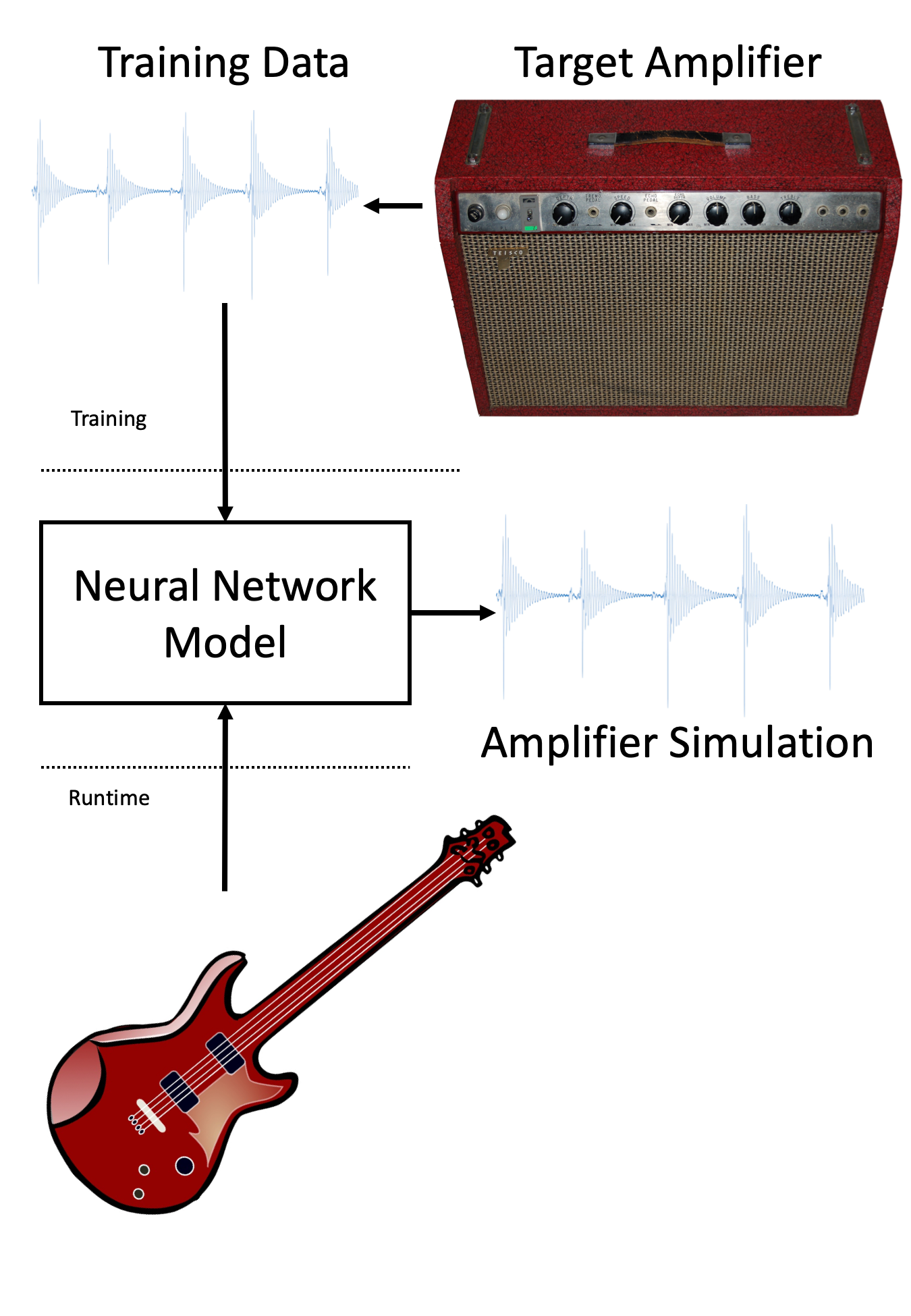
Authors of a paper accepted for publication in JAES are strongly encouraged to prepare a graphical abstract (GA) of the work performed. A GA is an image that summarises the work in an eye-catching way, ideally summarising the ideas of the paper. It appears alongside the text abstract in the online Journal and AES E-Library. The GA may be a figure from the article or preferably one specially prepared for the purpose, such as this example. A useful guide to preparing a GA can be found at www.annaclemens.com/blog/make-graphical-abstract-paper. Any text in the image should be clear and readable, in a sans serif font such as Helvetica or Arial. No caption or additional descriptive text is expected. The image file for the GA needs to be a PNG (Portable Network Graphics) file and should be uploaded with the final version of your manuscript. It should be in portrait format, US Letter or A4 aspect ratio, with a minimum resolution of 600 pixels wide, and preferably in color.
If you are going to submit a paper for presentation at a convention or conference then you should read these guidelines.
AES convention or conference papers or any other conference publications will not normally be considered for Journal publication in unmodified form. It is the Editor’s current policy that such manuscripts should be updated and/or extended to include a full review of existing work with complete references, including one to the original event’s paper, as well as sufficient additional detail and argumentation to make the work suitable for peer-reviewed journal publication. The title of the journal manuscript must be different from that of the convention/conference paper. Authors wishing such manuscripts to be considered for Journal review should submit them in the aforementioned revised form via the online submission system.
All material published by the AES, regardless of the type, shall conform to the following requirements unless specifically exempted by Publications Policy or by the Editor.
• Style: The technical content should be accurate; the writing should use good grammar and be easy to understand by those versed in the art. Abbreviations, units, and definitions of quantities should conform to the AES editorial style.
• Good Taste: Good taste is a necessity. No derogatory mention of other engineering work, engineers, or organizations shall be made. (Constructive technical criticism, which makes a suggestion(s) for improvement(s) that would remove the objection, is not derogatory if the technical basis is well developed and accurate.) The Editorial Office should ask reviewers to judge carefully the substance of such criticism. Specifically, the initiation of controversy should be minimized by a careful checking of the critical judgments. Controversy for its own sake should be discouraged.
• Commercialism: A manuscript which is based on a commercial product should be reviewed extremely carefully to determine the real scientific content. If a manuscript has no other merit than as a description of the product, it is not acceptable. This requirement is especially important in articles that provide technical results without an adequate description of a device’s operation.
• Original unpublished work: Manuscripts should describe original work unpublished elsewhere and not being considered for publication elsewhere. The Editor may also reject manuscripts that are original, but too similar to other published work. Publications of AES meetings, or of other meetings at the discretion of the Editor, may be further reviewed and republished in the Journal of the AES (but see note above regarding convention and conference papers).
• Trademarks: Trademarks are generally inappropriate because they serve a commercial purpose, not an engineering purpose.
a) Trademark symbols are not permitted.
b) Trademark names in titles and abstracts should be replaced by generic descriptions where possible. If trademarked names are retained in titles and abstracts, they will not be acknowledged as such.
c) The first time a trademarked name appears in the body text, it may be footnoted. The footnote will state that it is registered and the name of the owner.
(Updated 7 July 2023)