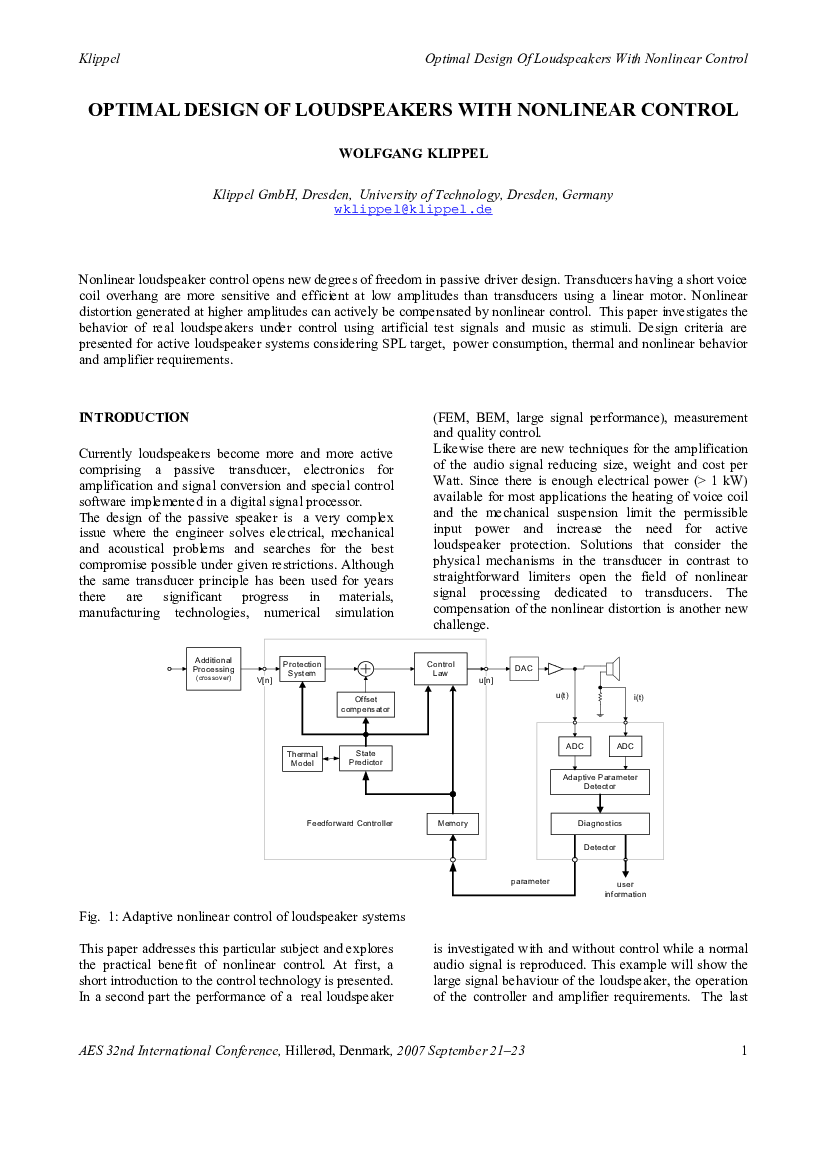
Nonlinear loudspeaker control opens new degrees of freedom in passive driver design. Transducers having a short voice coil overhang are more sensitive and efficient at low amplitudes than transducers using a linear motor. Nonlinear distortion generated at higher amplitudes can actively be compensated by nonlinear control. This paper investigates the behavior of real loudspeakers under control using artificial test signals and music as stimuli. Design criteria are presented for active loudspeaker systems considering SPL target, power consumption, thermal and nonlinear behavior and amplifier requirements.
Author (s): Klippel, Wolfgang;
Affiliation:
Klippel GmbH
(See document for exact affiliation information.)
Publication Date:
2007-09-06
Session subject:
DSP for Loudspeakers
DOI: