
Heyser Memorial Lecture
AES 117th Convention
Moscone Convention Center - San Francisco, CA, USA
Saturday, October 30, 2004 - 6:30pm
Edison's First Sound Film and the Three Fathers of Cinema
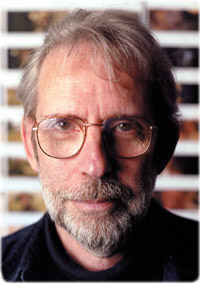
by Walter Murch
Abstract
 A presentation of Edison's first sound film from 1894, thought to be lost for many years. Patrick Loughney at the Library of Congress recently re-discovered and repaired the long-lost cylinder, and sent it to me to resync with the nitrate picture. An explanation of how this was done, despite the fact that there was no start mark, no standard frame rate for film, nor rpm for cylinder. Then, using Edison as a springboard, examine the hypothetical question: what would have happened to cinema if film+sound had been invented 100 years earlier? Would we have known what to do with it, or were, as I suspect, certain other 19th century cultural developments - dynamism in music (Beethoven) and realism in literature (Flaubert) - needed to prepare the way for film to catalyze cinema's true strengths: the dynamic representation of closely-observed reality.
Bio
Walter Murch has been honoured by both British and American Motion Picture Academies for his picture editing and sound mixing. In 1997, Murch received an unprecedented double Oscar for both film editing and sound mixing on The English Patient (Anthony Minghella), as well as that year's British Academy Award for best editing. Seventeen years earlier, he had received an Oscar for best sound for Apocalypse Now ( F. Coppola), as well as British and American Academy nominations for his picture editing. He also won a double British Academy Award in 1975 for his film editing and sound mixing on The Conversation (F. Coppola), was nominated by both academies in 1978 for best film editing for Julia ( F. Zinnemann), and in 1991 received two nominations for best film editing from the American Academy for the films Ghost ( J. Zucker) and The Godfather Part III (F. Coppola).
Among Murch’s other credits are: picture editing for The Unbearable Lightness of Being (P. Kaufman), Romeo is Bleeding (P. Medak), First Knight (J. Zucker), The Talented Mr. Ripley (A. Minghella), and K-19: The Widowmaker (K. Bigelow).
His most recent credit is for Cold Mountain (Anthony Minghella) for which he received an Academy Nomination for Editng, and British Academy Nominations for Editing and Sound Mixing
He has also been involved in film restoration, notably Orson Welles’s Touch of Evil (1998), Francis Coppola’s Apocalypse Now Redux (2001), and Thomas Edison's Dickson Experimental Sound Film (1894).
Murch was also sound effects supervisor for The Godfather (F. Coppola), and responsible for sound montage and re-recording on American Graffiti (G. Lucas), The Godfather Part II (F. Coppola), and Crumb (T. Zweigoff), as well as being re-recording mixer on all of the recent films for which he has also been picture editor.
Murch also directed and co-wrote the film Return to Oz, released by Disney in 1985.
Between films, he pursues interests in the science of human perception, cosmology and the history of science. Since 1995, he has been working on a reinterpretation of the Titius-Bode Law of planetary spacing, based on data from the Voyager Probe, the Hubble telescope, and recent discoveries of exoplanets orbiting distant stars.
He has also translated into English a number of previously untranslated works by Curzio Malaparte.